


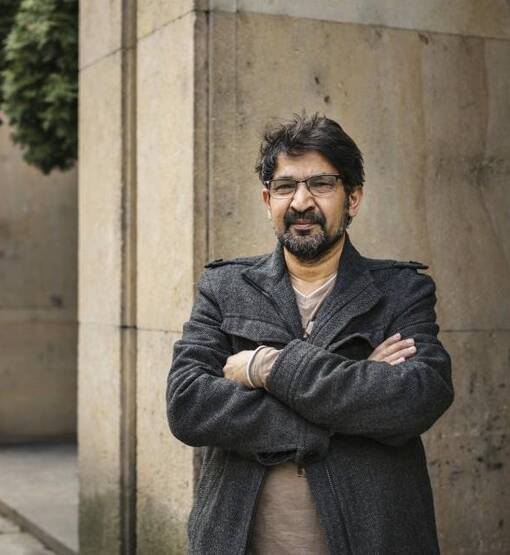
In 2013, Jalili visited his sister in Afghanistan and decided to fulfil a long-held dream.
On the outskirts of Mazar-e-Sharif, he found land suitable for building a primary school and later a healthcare clinic. In 2014, he established the Association for the Support of Education and Healthcare Development in Afghanistan.
When he asked Professor Vladimír Krčméry to recommend someone to become the third member of the association’s leadership, Professor Krčméry did not hesitate and symbolically took out his own identity card.
This marked the beginning of one of the most significant humanitarian projects in the region, a project in which St. Elizabeth University of Health and Social Work has played an important role since 2014.
The primary school was built thanks to the long-term and stable financial support of the University, which also played a key role in the subsequent construction of the healthcare clinic.
The project became possible not only through Jalili’s personal commitment and investment of his twenty years of savings, but also through the support of his family and project partners.
In Mazar-e-Sharif, it was possible to establish a primary school for hundreds of children and a healthcare clinic for mothers and children in a region with limited access to medical care. St. Elizabeth University of Health and Social Work played a key role in their development by providing long-term financial and professional support to the project.
In 2016, we helped establish a primary school for children who would otherwise have had no access to education. The school started with 180 pupils and today serves approximately 600 children. Girls attend classes in the afternoon, while boys attend in the morning.
Between 2020 and 2025, a healthcare clinic was constructed through a community-led effort with support from St. Elizabeth University of Health and Social Work, which contributed approximately one-fifth of the total project costs.
The clinic specialises in providing healthcare services for mothers and children in an area where no such services previously existed.
In October 2024, with the approval of the Association and in cooperation with the regional representative of the Ministry of Public Health of Afghanistan, the clinic began operating with support from specialists of the International Medical Corps (IMC).
Following changes in the United States administration, this support ended in April 2025. In the same month, the clinic was officially handed over to the Ministry of Public Health of Afghanistan.
Despite all the challenges facing Afghanistan, the local community has responded to the project with gratitude and appreciation. “They are very happy and grateful, and everyone knows us personally,” says Nasir Jalili about the reaction of the people of Mazar-e-Sharif.
Today, Nasir Jalili continues his work at the Slovak Medical University, but his heart remains divided between two countries—Slovakia, which gave him education and a home, and Afghanistan, to which he has dedicated his love and hope for a better future for its people.

Kontaktná osoba
